Awai
2026.5.31
26FW #5
産地を巡る旅で訪れた織元は、
素晴らしい技術を持ちながらも、日本で最後の一社となった場所だった。
私より少し年上の世代が若手と呼ばれる会社には、
六十代から八十代の職人たちが中心に働いている。
壁に掛けられた古い白黒写真には、
かつての活気が残されていた。
着物姿で機に向かう女性たち。
その隣には、海外から訪れた視察団の姿もある。
戦前か戦後かは分からない。
けれど、決して豊かな時代ではなかったはずのその頃、
異なる文化を知ろうと海を越えて訪れた人々がいたことに驚かされた。

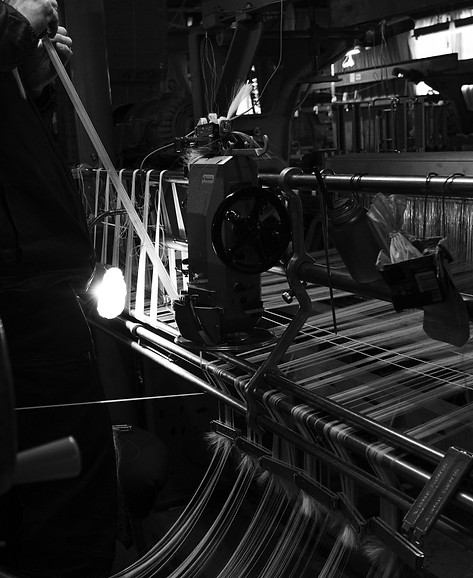
帰り道も、その写真が頭から離れなかった。
着物の袖をたくし上げ、
迷いなく働く女性たちの姿。
そこには合理性だけでは語れない、
身体と衣服が自然に結びついた美しさがあった。
洋服と和服。
その隔たりは、思っている以上に大きい。
けれど、
私が惹かれたのは違いではなく、
その奥にある共通した感覚だったのかもしれない。
身体の動きに寄り添い、
日々の営みの中で自然と形づくられる佇まい。
失われていく技術だけではなく、
そうした日本的な感覚もまた、
少しずつ遠ざかっているように感じる。
洋服と和服。
本来その二つは対立するものではなく、
その間にある感覚を辿ることはできないだろうか。
そのあわいを辿るように、
一着の服を形にした。
Blurred collar Shirt Jacket
_______ While not a kimono, it carries a quiet echo of one.


The weaving mill I visited during my journey through Japan's textile regions
was a place of remarkable craftsmanship,
yet the last remaining one of its kind in the country.
In a company where people only slightly older than myself are considered the younger generation,
the work is now carried on primarily by artisans in their sixties, seventies, and eighties.
On the walls hung old black-and-white photographs,
preserving traces of a once-vibrant past.
Women working at the looms in kimono.
Beside them stood groups of visitors from overseas.
I do not know whether the photographs were taken before or after the war.
Yet I was struck by the thought that,
even in what could not have been an affluent time,
people crossed oceans in an effort to understand a culture different from their own.
The images stayed with me long after I had left.
Women gathering up the sleeves of their kimono,
moving through their work with quiet certainty.
There was a beauty in those scenes that could not be explained by practicality alone—
a natural relationship between the body and the garment.
Western clothing and kimono.
The distance between them is greater than we often imagine.
Yet perhaps what drew me in was not their difference,
but the sensibility they quietly share.
The way clothing follows the movement of the body.
The way a presence is shaped through everyday gestures and daily life.
Not only traditional techniques,
but these distinctly Japanese sensibilities as well,
seem to be gradually fading from view.
Western clothing and kimono.
Rather than opposing one another,
might it be possible to trace the sensibility that exists between them?
This garment was shaped while tracing that awai.
Blurred collar Shirt Jacket

While not a kimono, it carries a quiet echo of one.